
The Making of Common Ground
By Jacinto Salcedo
This spring, the Upper Canada Choristers will premiere Common Ground: Songs of Empathy, Kindness and Love, a six-movement work written for the choir by its artistic director, Laurie Evan Fraser, with lyrics by choir co-founder Jacqui Atkin and me, Jacinto Salcedo. This is my story of how it came about.
"Inspiration exists, but it has to find us working."
Pablo Picasso
Knowing Laurie for years, a couple of questions have always lingered in my mind. Having the knowledge and the sensibility that she has, why hasn’t she written more music?
As artistic director, she has commissioned music in many formats, ranging from simple songs to major works – some with an orchestra or soloists, others experimental or folkloric. In other words, her assignments have run the gamut of choral genres.
But inspiration is still a mystery. I have seen Laurie go for years without writing new music, although it was certainly not from a lack of confidence, knowledge or enthusiasm.
What we know today as Common Ground started as a simple idea: to write a couple of songs about empathy in a world going through a terrible time.
Wars in Ukraine and Gaza, a new government in the USA eliminating programs for diversity, equity and inclusion (a move that feels racist, homophobic, and exploitative). A heightened xenophobia masking as a crackdown on illegal immigration, where economic sanctions are presented as tariffs.
The divide between people with different skin colours, income levels, notions of love, community, belief systems, and traditions is getting wider and wider.
We talked about making a stand through art. To say something. We might not have the political platform or influence to make a massive difference, but we can certainly make a meaningful contribution through music and poetry.
For some time, Laurie has been following U.S. historian Dr. Heather Cox Richardson, who has become a beacon for understanding the moment we are living in, and who clearly advocates for “art as joyful resistance”.
So, in 2025, Laurie spent the summer exploring new avenues of composing. As she said, she wanted to create a “tapestry” of songs, presenting different points of view and languages.
Everything started with Seeking Empathy
The first song she worked on was Seeking Empathy, written in the tradition of songs sung by miners and labourers.
The structure was inspired by a 16th-century song called Quand je bois. Each part has a distinctive message and melody. As Laurie explains, the song starts with the basses, then builds up in layers, with the addition of each choral section. “Once the foundation is laid, you weave the tapestry – much like the architecture of our choir, the Upper Canada Choristers,” she added.
“Survival, at its essence, is meeting the basics to ensure life. Sometimes that is all we can manage, but if we can, we help those we love and those whom our loved ones love. The care ripples out. Then we don’t just survive, we thrive.”
Lyrically, Seeking Empathy was inspired by Merle Travis’ song Sixteen Tons. drawing upon the experiences of the common worker – those who work day in and day out, looking for sustenance – and the ripple effect of working together.
This is reflected in Jacqui Atkin’s words. “If I treat others with respect, then that respect flows back to me. The Golden Rule is in every culture—why can’t we practice what we preach?... Why can’t a stranger become a friend, then family?”
As an aside, I can see how this song is a nod to Laurie’s late father, Vincent Evan, who was a much-respected union leader in Pennsylvania for many years.
Stories in rap and waltz
The second song in the works – that became the fifth movement – came to Jacqui in a dream. She wanted to write a rap, using a playful approach that bridges joy to hope – and in a way, offering a more contemporary version of The Sound of Music’s My Favourite Things.
According to Jacqui, “We all find ways to make it through tough times - a snapshot of joy in life or a powerful memory. If we hold these things in our minds, they help us overcome the darkness and allow joy to bubble up.”
“Weeping may endure for a night, but joy cometh in the morning” Psalm 30:5.
At this point, having songs of empathy and joy felt like a good foundation for Common Ground, so Laurie pushed her artistic vision to include a Spanish-language song, and giving me free reign to write the lyrics.
I have long wanted to write poetry from a storytelling perspective and have always admired how someone like Billy Joel can write beautiful, melodic songs that wrap around stories (and then sets them to a waltz tempo, such as Piano Man for example).
Let’s sing in Spanish
I wrote two poems to give Laurie options. I tried to make them structurally different, but both are based on current events – the first about the war in Gaza, and the second about deportations in the United States.
Laurie liked them both, so we began to work on them.
The first song was inspired by a photo of children playing in the rubble in Gaza. In the midst of war, kids are kids, trying to understand what’s happening when they should be at school, hanging out with friends.

Palestinian children play amid the rubble at a park destroyed during Israel’s military offensive, during Eid al-Fitr, amid the ongoing conflict between Israel and the Palestinian Islamist group Hamas, in Gaza City April 11, 2024. REUTERS/Mahmoud Issa
The song is based on the human experience of war, not the politics of war. These kids are the sons and daughters of someone, not just casualties.
Niño de nadie, niño de todos (Nobody’s Child, Everyone’s Child) was written as a “décima” (a ten-line stanza), that’s a form of Spanish poetry used in many folkloric writings in Latin America, such as the Uruguayan Milonga, the Cuban Guajira or Son Montuno, the Mexican Son Jarocho, the Puerto Rican Trova, or the Venezuelan Galerón Oriental.
For this, Laurie wrote a brilliant musical motif that evokes a haunting Arabic-sounding melody.
The second song was inspired by a photo as well, of a Mexican immigrant who was detained at his daughter's graduation and deported. My poem narrates a common story of immigrants: they leave their countries out of necessity, looking for a better future for their children. In the past year, the US government has been targeting immigrants as if they were criminals. This song challenges the notions of borders, dreams, hope and pride.
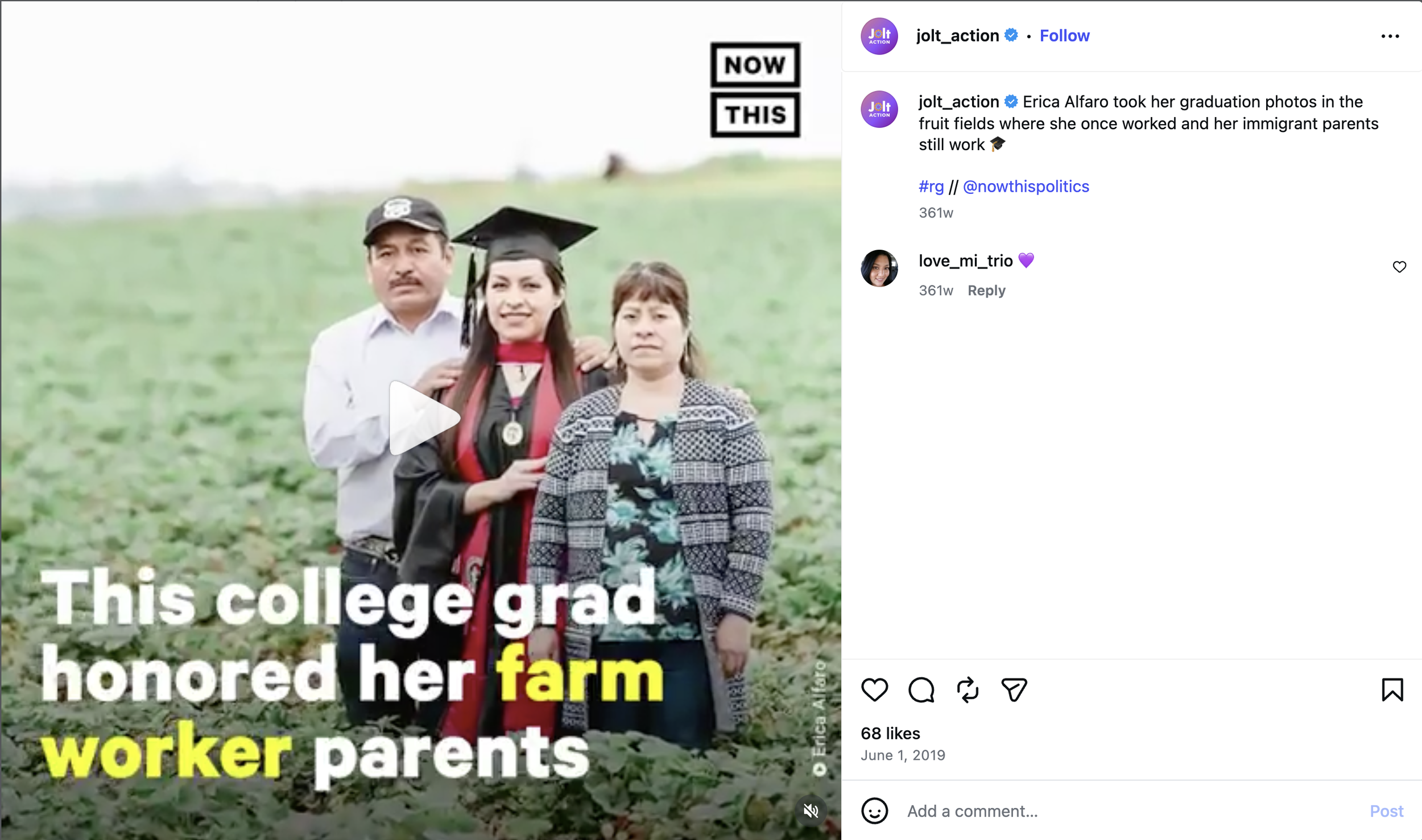
Although you may well consider this to be a sad story, the underlying message is about the pride of these parents and how hard they have worked to provide a better life for their children. “His dreams know no borders. And so, he rises each day to try again.”
Laurie’s vision was to make it a waltz, a piece that feels danceable, and that represents the Latin American spirit. Somehow, as the parents waltzing together in love, even when times are turbulent. Again, the theme of resistance through joy percolates throughout the music.
Belonging
The set of songs was taking shape, but we had two extremes. On one hand, songs of hardship and on the other hand, a song about joy. What should bridge the gap? How can we express the full range of human emotions?
While brainstorming that task, I reached for some books on my nightstand, and there it was: Brené Brown's Atlas of the Heart.
Trying to pinpoint an emotion about settling in, about being seen and accepted, we started writing ideas about belonging. That is how Come as You Are was born.
Laurie decided to begin with a musical quote from a Sufi dance, which asks: Who are you? Who stands here in front of me? I am you, in another form.
We have always wanted to make our choir inclusive, a safe space for expression where every member contributes in their own way. And since our choristers come from a diverse range of cultural backgrounds, we invited them to tell us, in their own language, “come as you are”. As a result, we have included phrases in Tagalog, Japanese, Swedish, French and Spanish.
In our quest to integrate many voices, we reached out to some Canadian Indigenous acquaintances and asked for their take on ‘come as you are’. To our surprise, we learned that a phrase like that simply doesn’t exist in the indigenous languages. There is no way to show up other than being yourself. We have much to learn about ourselves and community expectations.
And then, a blessing
With five songs at various stages of development, Laurie made a new request. She said that we needed a blessing, as a final message to complete Common Ground. It was to be in the tradition of Agnus Dei, but we agreed to make it less religious and more aspirational on a human level in our quest for peace.
So, the final movement is both a blessing and a reflection of our wish for a better future. More than a prayer, the blessing emphasizes our shared responsibility; it is a plea and a guiding map, a statement of empathy, kindness, love, and understanding of our common ground.
Musically, it repeats passages from throughout the other five movements, ending as it began – a musical device called bookending – urging us all to treat others with respect, integrity, tolerance, and empathy, to reach that Common Ground.
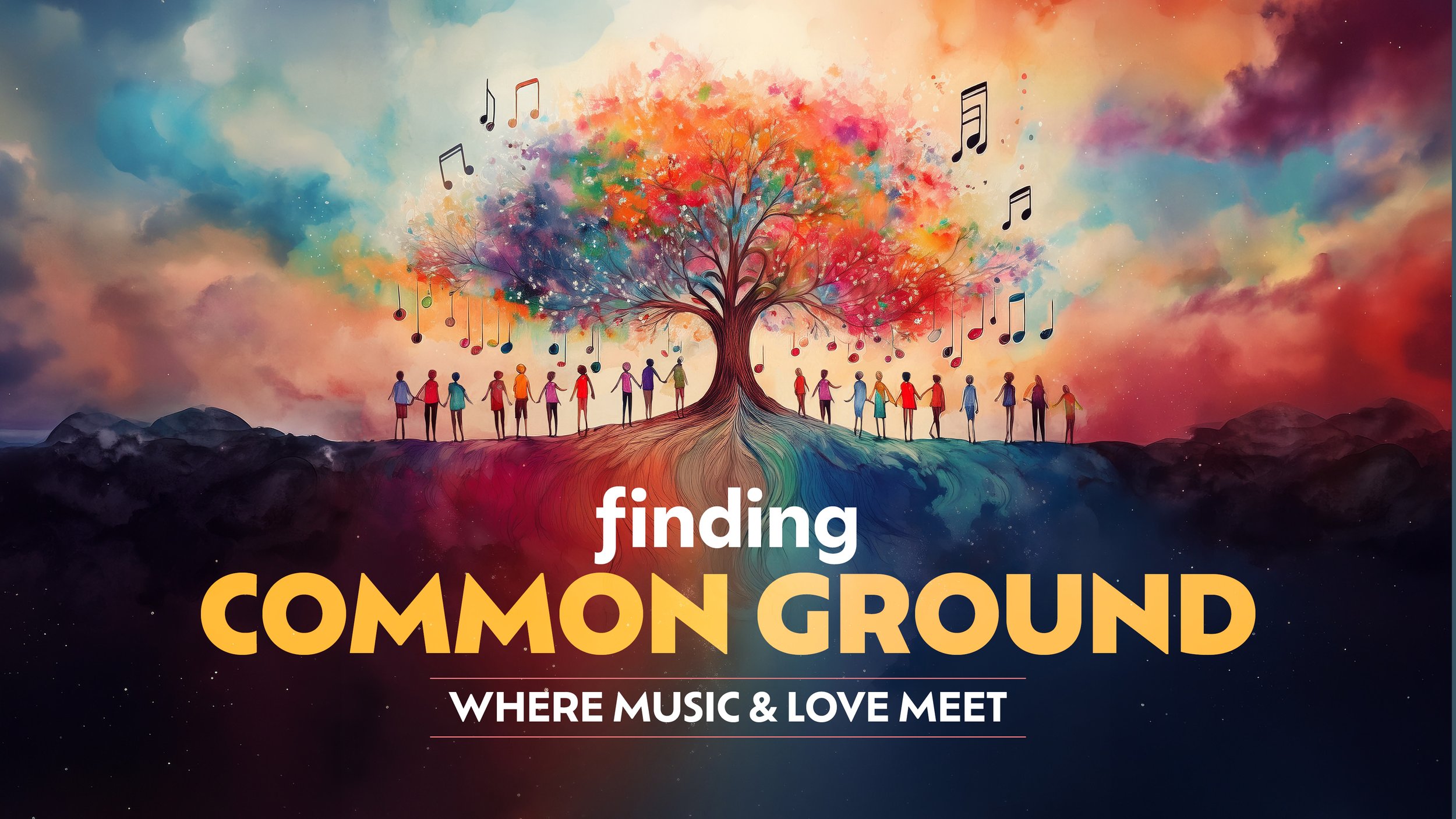
Key Art for the concert Finding Common Ground by Otto Pierre.